
Lucas Mercuri: From Backyard Rinks to the Big Stage
Posted by Lucas Mercuri on 11 06 2025
ProStockHockey.com proudly presents Journeymen, our ongoing blog series — a raw, unfiltered look into the lives of elite players at various stages of their individual hockey journey, told entirely in their own words. This series isn’t about stats or headlines — it’s about the miles, the grind, and the road that shaped them. Each story dives deep into the successes and failures, the setbacks and celebrations, and those moments when walking away might have been easier — but they didn’t. Through honesty and reflection, these players share what kept them moving forward and what they want young, aspiring players to know from their own experiences as they chase their own hockey dreams.
Before the college games, the draft, or the professional contract, there was a little kid in Montreal with a stick, a dream, and a heart full of determination. This is where it all started for me. From learning to skate before I could properly walk, to spending every spare moment chasing a puck across the ice, hockey became more than just a game. It became my purpose. I want to share not only my story, but the lessons, challenges, and mindset that shaped my journey. Every player’s path is different, and this is how mine began.
THE START OF SOMETHING BIGGER
My name is Lucas Mercuri. We’ll start where I am now and then jump into how I got here. After playing four years of college hockey at the University of Massachusetts, I recently began my professional career after signing a two-year entry-level contract with the Tampa Bay Lightning. I didn’t know where the game would take me, but I’m incredibly grateful and proud of where I am today.
That said, I want to be clear, my path is uniquely mine, and yours might look totally different. You might wonder why I made certain choices, took specific steps, and that’s okay. I know NHL players who didn’t start skating until they were 10, others who worked full-time jobs before making it, some who trained three times a day, and others who played different sports all summer while growing up. There’s no one-size-fits-all path to success in this game. Just focus on doing what you truly love. If you’re passionate about something, it never feels like work. That’s exactly how I’ve always felt about hockey from a very young age.
My hockey journey started early, my dad had me on skates by the time I was 2 years old. Growing up in Montreal, playing hockey was every kid’s dream, and I was no different.
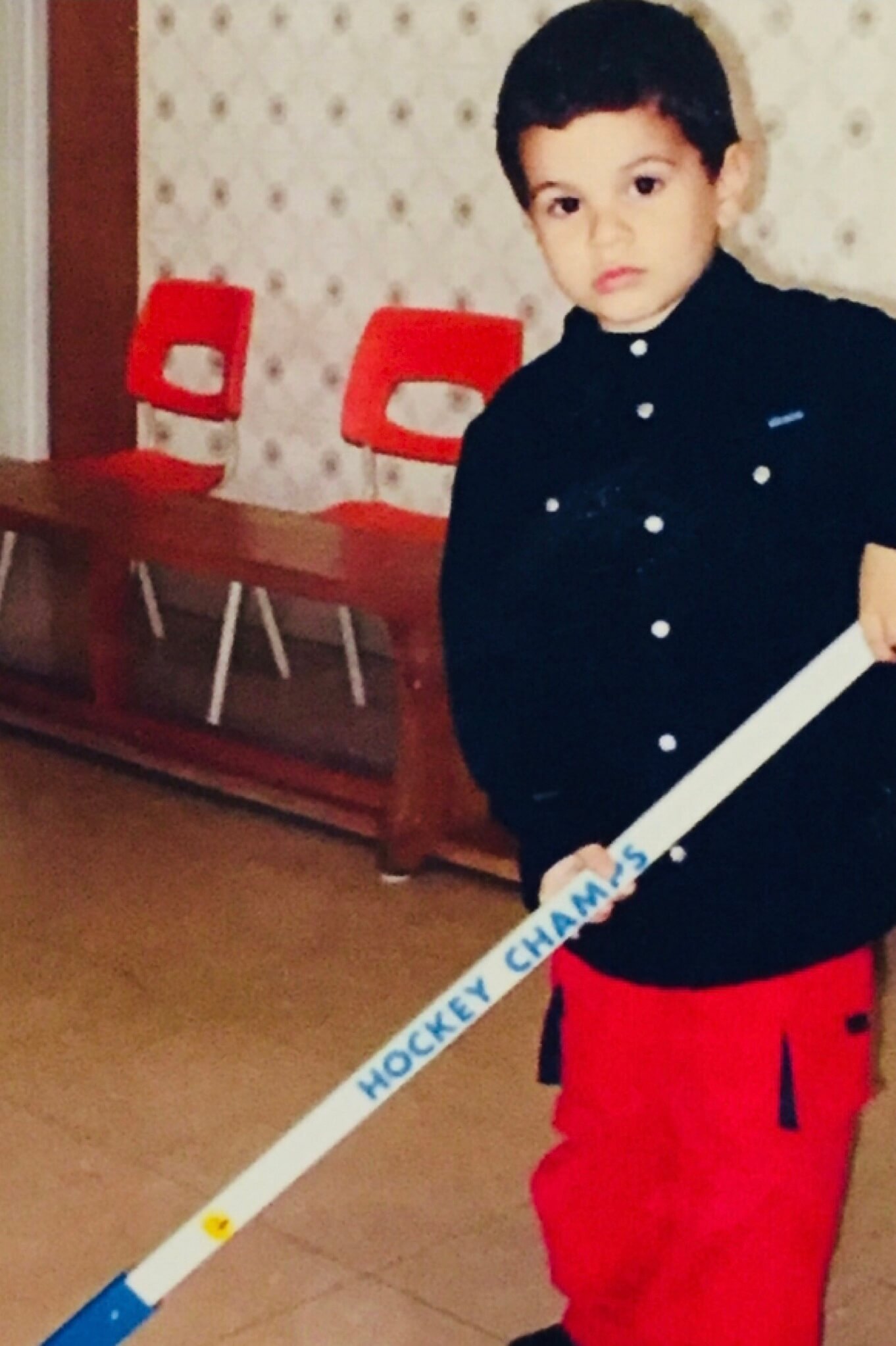 My dad was my biggest inspiration growing up. He played the game at a high level and naturally hoped I would follow in his footsteps. Once I discovered my own passion for hockey, I was all in. By the age of 8 years old I dropped every other sport and focused completely on the game I fell in love with. But that decision came from me. No one forced me. No one pushed me past my limits. It was about how badly I wanted it and the effort I was willing to put in.
My parents were everything during those early years. They believed in me before I fully believed in myself. They challenged me to keep an open mindset, especially during the ups and downs of minor hockey. Looking back, I’m convinced that their focus on building my confidence and mental resilience is a huge reason why I’m where I am today. I’ll dive deeper into that later, especially the role of mindset and self-belief in chasing your goals.
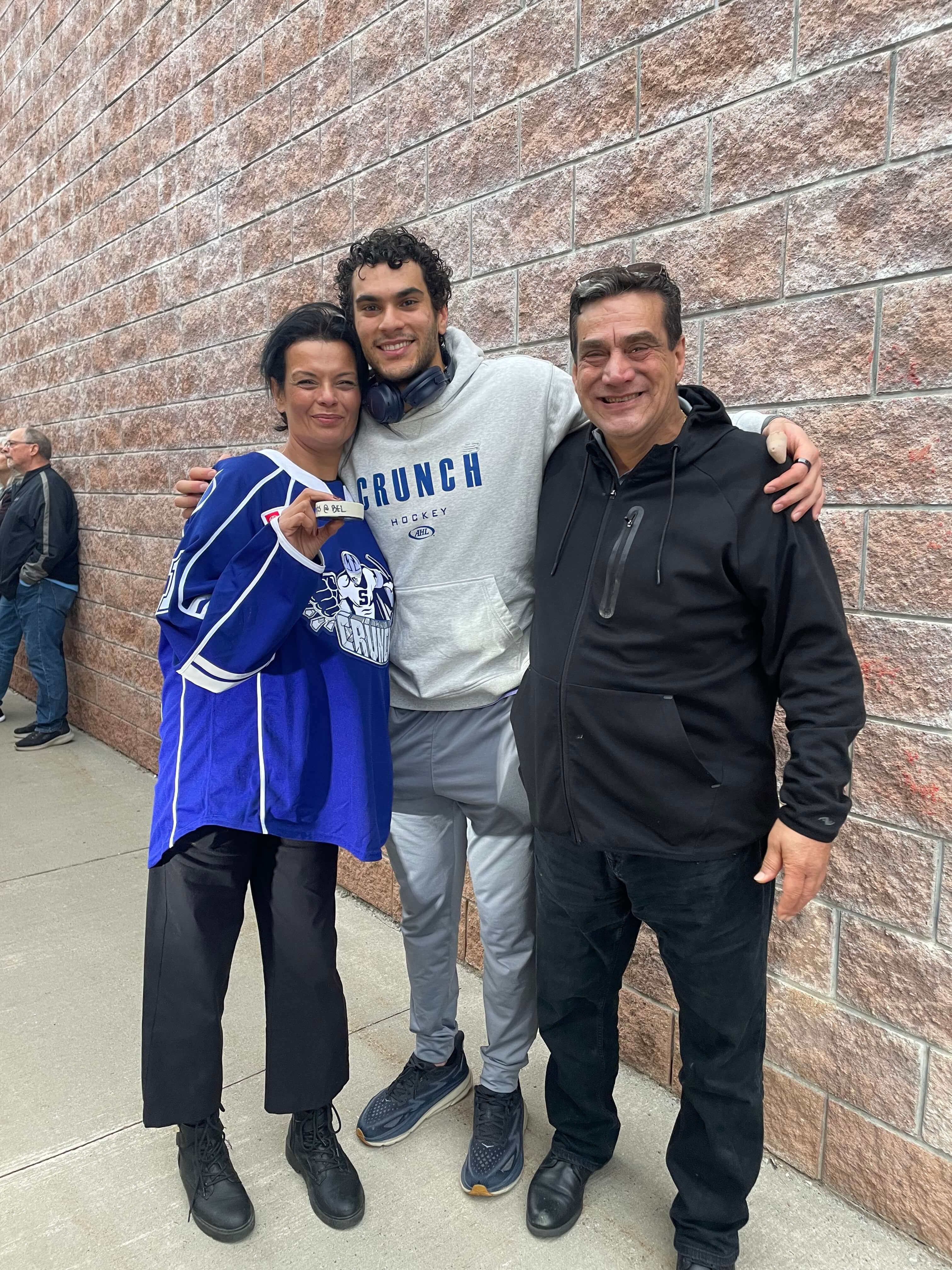 Growing up in Montreal, hockey was extremely competitive. There were politics, pressure, and plenty of challenges along the way. I was a bit different from most of the other kids. I wasn’t fluent in French, which made it harder to connect with coaches and teammates.
Communication was a struggle, and I knew I would have to go the extra mile to stand out. So I did. I knew I had to work a little harder, study the game more, and even had my mom speak to me in French at home to help me improve. I wanted to make sure that even if I could not always express myself with words, my game would speak for itself.
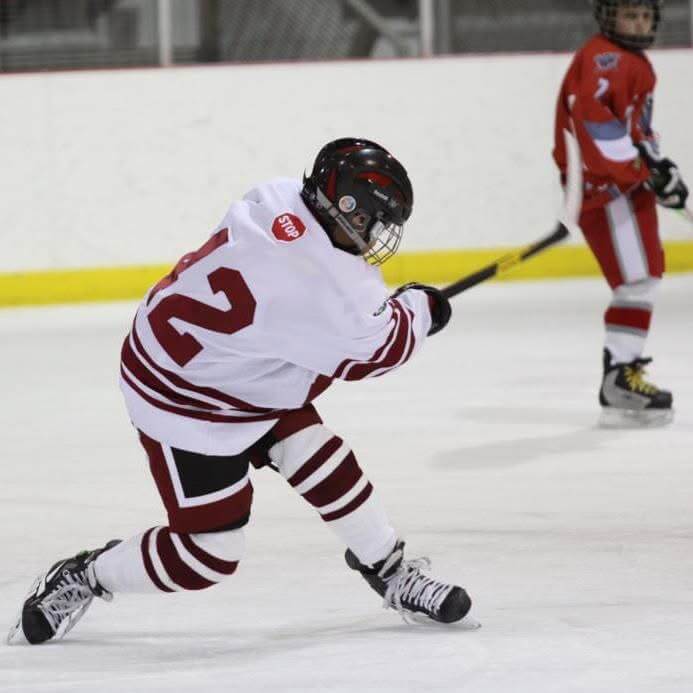 All of that, every extra rep, every uncomfortable conversation, every challenge helped shape my character. And believe me when I say the number one thing scouts or college coaches look for is your character! Anyways, this gave me an edge and a drive that still pushes me today. When I was young, I saw the game well, I loved scoring goals and making plays. But whenever people watched me play, they always commented on my skating. I would hear things like, “He will not make certain teams” or “He cannot move up to the next level,” all because of my skating.
So what did I do? I worked on it. Every Friday, while I was playing ball hockey, I would get picked up and head to an hour of power skating. I hated it at the time, but looking back now, I am grateful for every session. Again, I want to make it clear that this was not the most typical childhood. I did all these extra things because I loved the game so much from a very young age.
I watched hockey constantly, trying to mimic the way the best players in the world skated. If you really want to improve your game, I highly suggest studying the best players in the world and copying what they do.
If you are starting to notice a bit of a pattern, you are right. Every time someone said I could not do something, that I would not make a certain team, or that I could not play at a certain level, it lit a small fire in me to prove them wrong. That drive became something I loved. But as you get older, you realize those people do not really matter. At some point, it stops being about proving others wrong. It becomes about proving something to yourself and doing it for the people you love the most and that’s your family, your friends, the ones who supported you the entire way.
I’ll say it one more time, prove it to yourself!!!
FINDING MY OWN WAY
When I was 14 years old, I played Midget AAA in Montreal, which was the main development league for 15- to 17-year-olds before moving on to junior hockey. I was fortunate to be playing as an underaged player, and that early opportunity gave me the experience I needed to be ready for the following season, which would be my QMJHL draft year.
Those two years in Midget AAA came with their share of challenges. I used to take an hour bus ride to the rink after school, and I was the only player from my school on the team. All the other guys went to the same school and already knew each other, so it was easy to feel left out. It got lonely at times, and that part of the journey is something people do not always talk about. But looking back, those moments helped me build independence, discipline, and mental toughness that I still carry with me today.
At the same time, I also wish I had approached those years with a better mindset. I now realize that if I had made more of an effort to open up and connect with my teammates, things could have been a lot smoother. It was hard for me to speak up or break out of my shell back then, but I understand now that getting a little uncomfortable would have helped me grow not just as a player, but as a person.
That is a piece of advice I would give to any younger player going through something similar. Do not take yourself too seriously. Have fun. When it is time to work, put your work boots on. But when it is time to connect with a teammate, share a laugh, or start a conversation, do that too. The bonds you build along the way are more important than the stats and the wins.
TRUSTING THE PROCESS
After playing two seasons of Midget AAA, I made the decision to go to Salisbury School for two years instead of jumping into junior hockey in the CHL. At the time, there were options on the table, but this was a decision I made with a lot of thought and guidance, especially from my dad.
He played in the QMJHL himself, so he understood the junior route very well. But more importantly, he and my mom always emphasized the value of education and making sure that I had options beyond hockey.
We both agreed that I was still growing into my body and that I needed time to round out my game. I was developing physically and learning how to use my frame more effectively, and we felt that rushing into major junior at that stage might not have set me up for long-term success. Going the prep school route gave me time to grow on and off the ice, and to develop at a pace that made sense for me.
My time at Salisbury was special. We had an incredible team, a group that really came together both on and off the ice. We won championships and built a winning culture that everyone bought into. Every day was competitive, but it was also fun, we pushed each other to be better, and the success we had as a group was something I’ll never forget. Being part of a team like that showed me what it means to play for something bigger than yourself.
But even with all that success, there were tough moments. During my time in prep, I went through a bit of a breakdown where I really started to doubt myself. I was constantly comparing my game to others through social media or whatever it was, players in junior, guys getting drafted or committing early, and it ate away at my confidence. I remember wondering if I’d ever make it, if I was good enough, or if I had made the right choices.
Looking back, that period taught me one of the biggest lessons I’ve ever learned: Comparing yourself to others is completely useless. Everyone’s journey moves at a different pace, and the only thing that truly matters is focusing on your own growth. Once I stopped worrying about where others were and started trusting my own process, I began to play freer, enjoy the game more, and get better for the right reasons.
How did I get over the noise and comparing? What really helped me overcome the habit of comparing myself to others was learning to be present. I started practicing meditation regularly, and it taught me how to slow down, quiet the noise, and focus on where I was in that exact moment, not where I thought I should be or where others were. Being present helped me shift my mindset from chasing external validation to appreciating my own progress. It reminded me that growth happens step by step, not all at once, and that staying grounded in the moment is where real confidence and improvement come from.
COMPETING AND EARNING
My time at UMass was truly unforgettable and remains the best decision I have ever made both on and off the ice. Over the course of four years, I had the privilege of playing with some of the most talented and dedicated players I have ever met. We pushed each other every day in practice and in games, constantly striving to get better as individuals and as a team. The bond I share with my teammates goes far beyond the rink. Those relationships have become some of the strongest and most meaningful connections in my life. Together, we made three NCAA tournament appearances, and were the Hockey East Champions, and all these accomplishments were for our program and something we worked extremely hard to achieve. Each playoff run was intense and physically demanding, filled with high pressure moments and unforgettable experiences that tested our resilience. Competing at that level showed me the importance of trusting your teammates completely and staying focused no matter how difficult the circumstances.
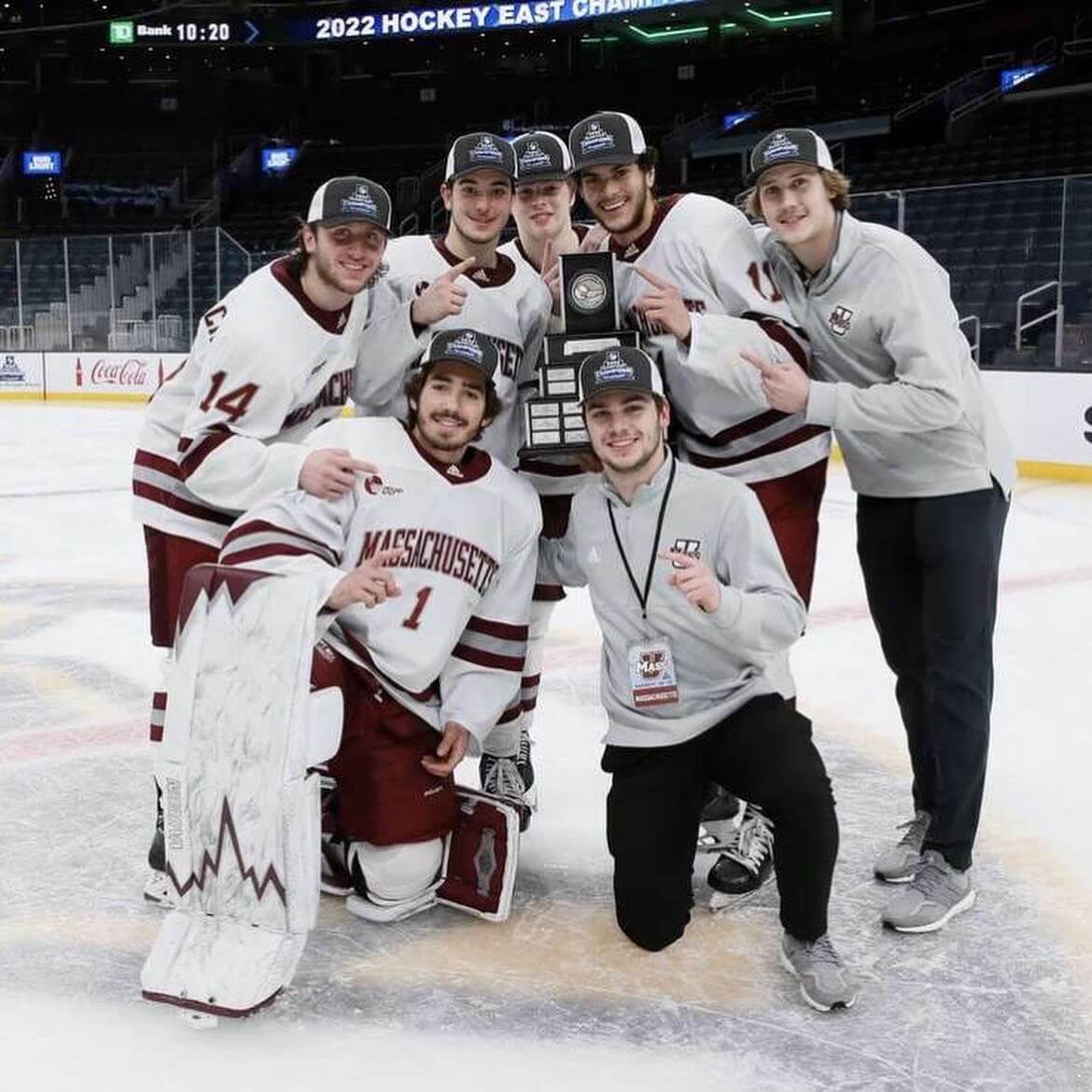 Environment is everything.
Your environment and the people you surround yourself with are so important to your success and growth. I chose UMass not only because of the opportunity to play but because I knew the coaching staff would be hard on me. I wanted that challenge. I wanted to be pushed every day to get better and to be held accountable. That kind of environment forces you to grow, to develop discipline, and to find new levels within yourself. Playing four full years of college hockey gave me time to grow in every aspect of my life. The balance of academics, athletics, and personal growth helped shape who I am today in a way that rushing through hockey could never have done. I learned discipline, leadership, and how to handle adversity both on and off the ice.
Looking back on those years, I can honestly say they were some of the best of my life. The memories, friendships, and lessons I gained during that time will stay with me forever and have made me a better player and person.
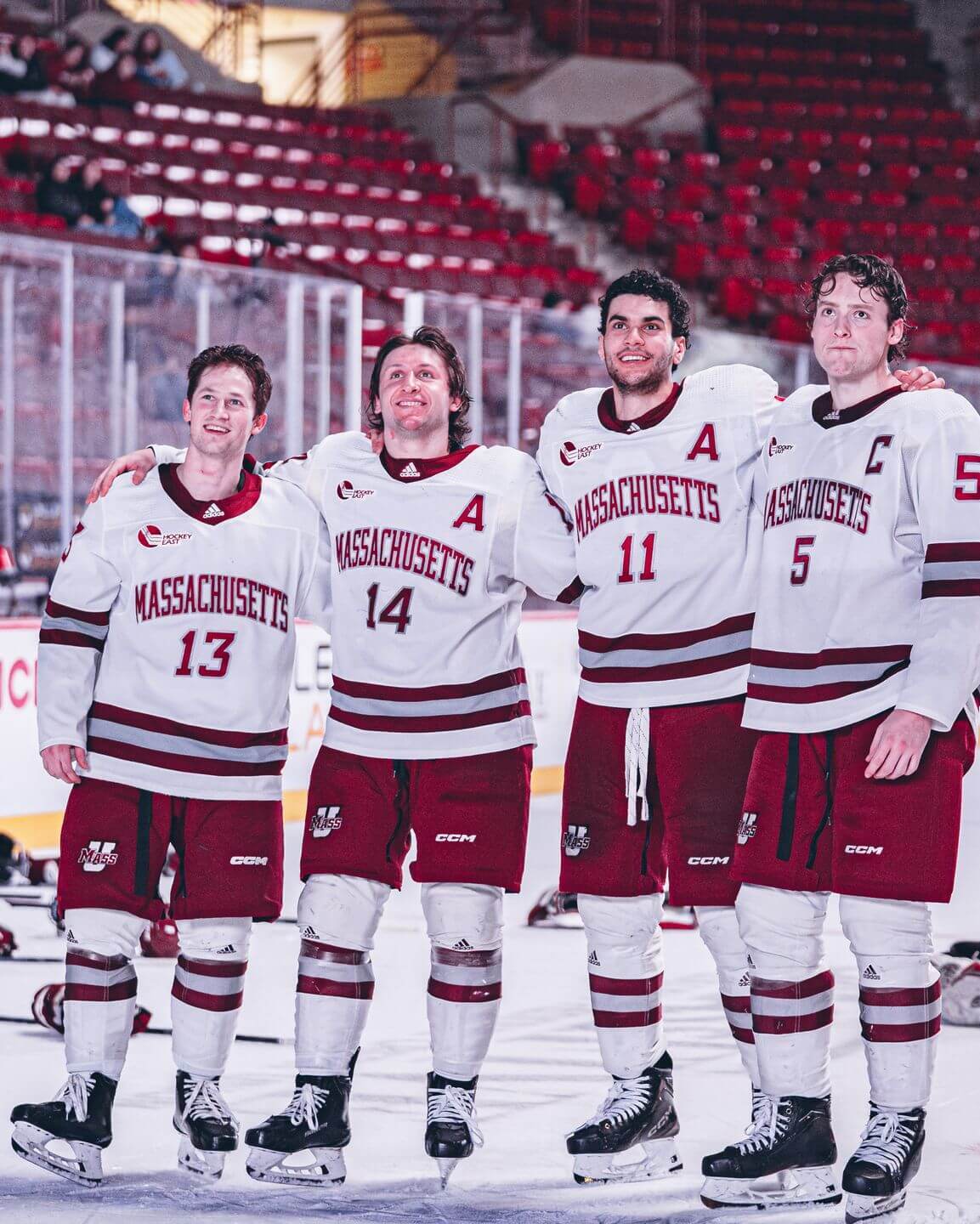 Another reason why your environment is everything is because it truly shapes who you are. There is a saying that goes, show me your friends and I will know who you are, and I believe that more every year. I grew up with a small group of friends who are all extremely competitive, driven, and committed to getting better. We have been training together and battling against each other since we were about 13 years old, all chasing the same dream of playing professional hockey one day. My closest friends, Dylan Finlay, Dylan Hryckowian, Justin Hryckowian, Devon Levi, and Marshal Rifai, have all been a huge part of my journey. Dylan Finlay and Dylan Hryckowian are both at Northeastern University and are on the verge of signing their first professional contracts. Justin Hryckowian is with the Dallas Stars after making the team out of training camp, while Devon Levi and Marshal Rifai have already made the jump to the professional level and are working toward becoming full-time NHL players. We have grown up together in every sense, skating, working out, and pushing each other every single day. None of this is by chance. It is the result of surrounding yourself with the right people, people who push you, challenge you, and bring out your best. We all wanted to make it to the NHL, and now we can look at each other and be proud of how far we have come and how close we are to reaching that dream.
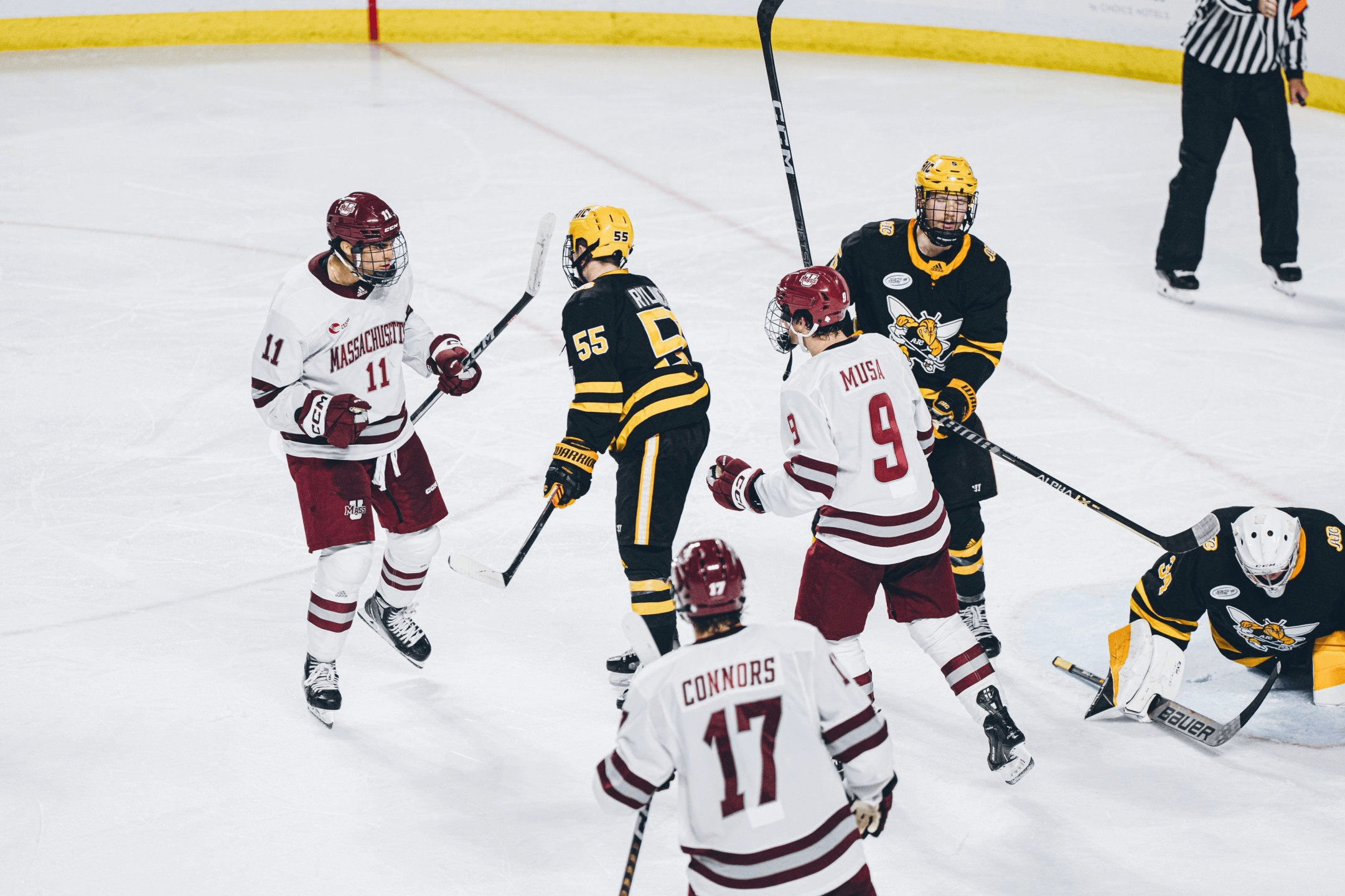 The environment at UMass was everything I wanted to be a part of. During my time there, we had around 10 to 12 players sign NHL contracts, which says a lot about the kind of culture and standard that exists within the program. Every day you were surrounded by players who were driven, competitive, and serious about their goals. That type of environment brings out your best, because you have no choice but to match the intensity of the people around you. I wanted to be in a place where everyone was pushing each other, where the expectations were high, and where development came from hard work and accountability. Being part of that atmosphere taught me what it really means to commit to excellence and to never settle for average.
ADJUSTING AND PROVING MYSELF
After a year in the USHL with the Des Moines Buccaneers, I came into UMass confident in my skill set and excited to make an impact. But my freshman year was not easy. I had always been known as a skilled player, used to playing in top offensive roles, and suddenly I was adjusting to life on the fourth line. The jump to college hockey was real. The pace. The structure. The physicality. I had to learn quickly how to contribute in ways that did not always show up on the scoresheet. It was humbling. There were nights I questioned my role and wondered if I was doing enough. But it also taught me a lot about resilience, work ethic, and the importance of being a team player no matter where you are in the lineup. Those early struggles pushed me to expand my game, become more complete, and earn trust in different situations.
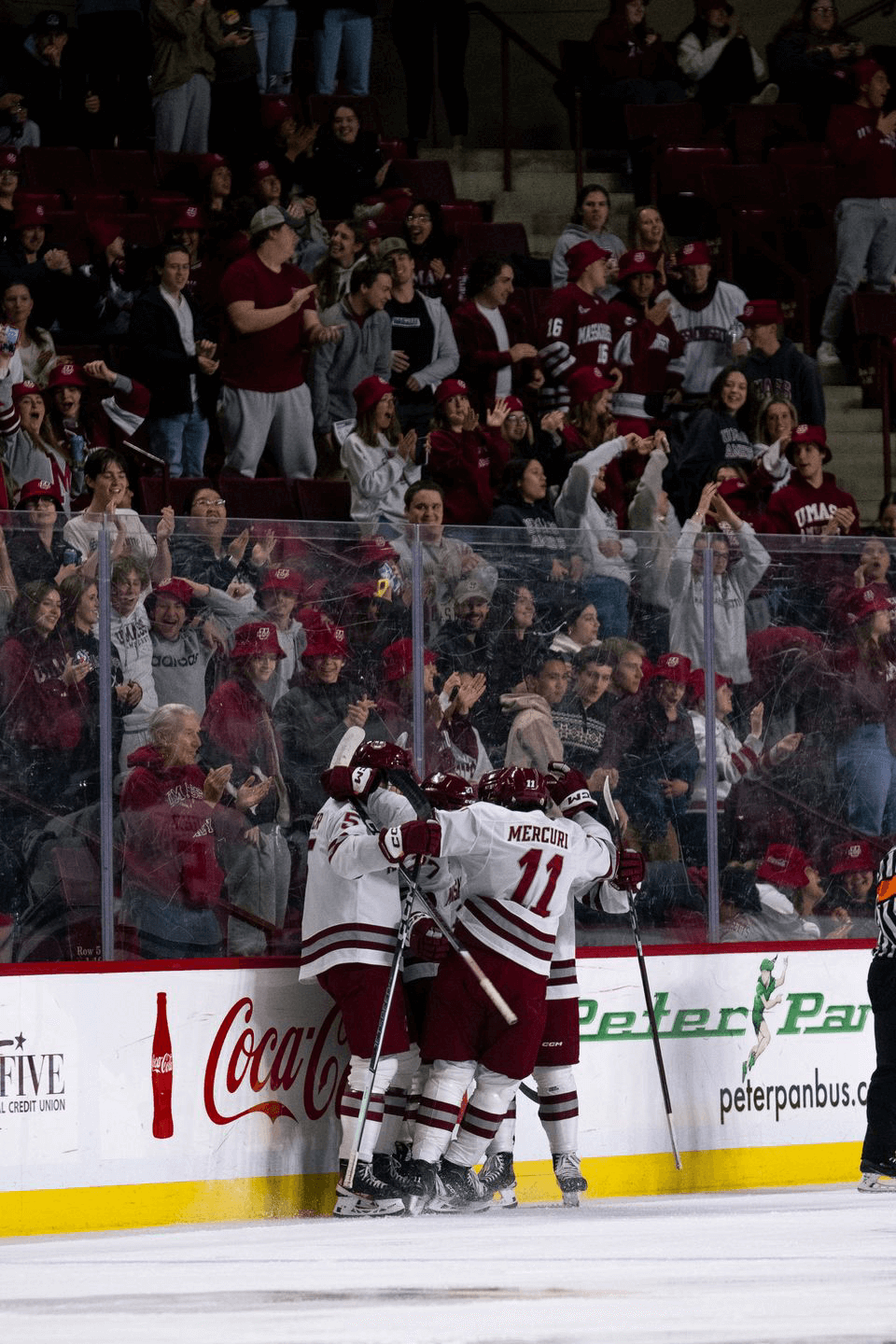 There was always a part of me that wanted to prove the coaches wrong. Every time I felt like I was being overlooked or doubted, it pushed me harder. I never wanted anything handed to me. I wanted to earn every opportunity and make it impossible for a coach to ignore the work I was putting in. That became a big part of who I was as a player. If I was not getting the ice time I wanted, I would show up earlier, stay later, and do the small things that most people did not see.
I learned to use frustration as fuel. Instead of getting bitter, I got better. That mindset carried me through a lot of difficult moments. I told myself that no matter what a coach thought, I would not give them a reason to doubt my effort or commitment. I wanted to take away their choice, to perform so consistently that the only option was to play me. It was never about proving anyone wrong out of anger. It was about proving to myself that I could respond the right way and use every challenge as motivation. That drive still motivates me every day I step on the ice.
ONE MOMENT DOESN’T DEFINE YOU!
Leading up to the NHL Draft was one of the most emotional and uncertain times of my life. Every player dreams of that moment, hearing your name called and realizing that all the years of hard work might finally be paying off. But for me, it looked completely different than I had imagined growing up. It was during the pandemic, and the draft was held virtually. Instead of being surrounded by family and friends in a big arena, I was in Iowa with my team, watching everything unfold on a screen.
It was a strange mix of excitement and nerves. I was proud to even be in that position, but I also had made peace with whatever the outcome would be. I knew deep down that a draft did not define me. If my name was called, it would be an incredible honor, but if it was not, it would not have changed my goals or the way I approached my work. I had seen so many different paths in hockey and knew that success never comes from one single moment. It comes from showing up, day after day, and continuing to grow no matter who notices.
When my name was finally called, it was surreal. I remember sitting there in disbelief, watching it happen on a screen, and my phone started to blow up with calls and messages from family, teammates, and coaches. Even though my parents were not physically with me, I could feel their pride from miles away. It was a special moment, but more than anything, it reminded me of all the people who had believed in me along the way.
That night, I told myself one thing. This moment does not define you, and it never will. Getting drafted is not the finish line, it is just another step in the journey. Whether it had happened or not, I was going to keep pushing forward, keep improving, and keep chasing the dream that I had loved since I was two years old. Now going through the college route, I have seen so many college free agents signing NHL contracts without being in the draft conversation when they were 18. It’s amazing on how if you just keep working hard, there’s always a light at the end of the tunnel. Sometimes the light is brighter than other days, but I try to tell myself that it’s always there.
COACHING AND STAYING TRUE TO YOURSELF
Throughout my career I have had moments where I did not see eye to eye with coaches. There were times I thought I deserved more ice time or that I was ready for a different role, and it was hard to understand why I was not getting it. When you are young, it is easy to take those situations personally and to think a coach does not like you or does not believe in you. Over time I learned that coaches see the game through a much wider lens. They are not just thinking about one player, they are thinking about the team, the system, the culture, and the long-term development of everyone involved.
What made those moments even harder was trying to figure out what a coach was thinking. I used to spend so much energy reading into every decision. If I was moved down a line, I wondered what it meant. If a meeting felt short, I questioned if I had done something wrong. You start to replay every shift in your head and analyze every detail, hoping to find answers. That mindset can wear you down fast, because you end up chasing clarity instead of focusing on what you can control. I eventually realized that trying to read a coach’s mind is impossible, and more importantly, it is a waste of energy that could be spent on getting better.
Those experiences taught me that actions speak louder than words. Coaches are constantly watching, and consistency builds trust more than anything you can say. The moment I stopped worrying about how a coach viewed me and started focusing on being reliable, my game changed. I began to approach every day like an opportunity to earn respect through effort.
Whether it was a good day or a bad one, I showed up, worked hard, and kept my emotions steady. Over time, that earned me roles, ice time, and trust that no amount of guessing or overthinking could have achieved.
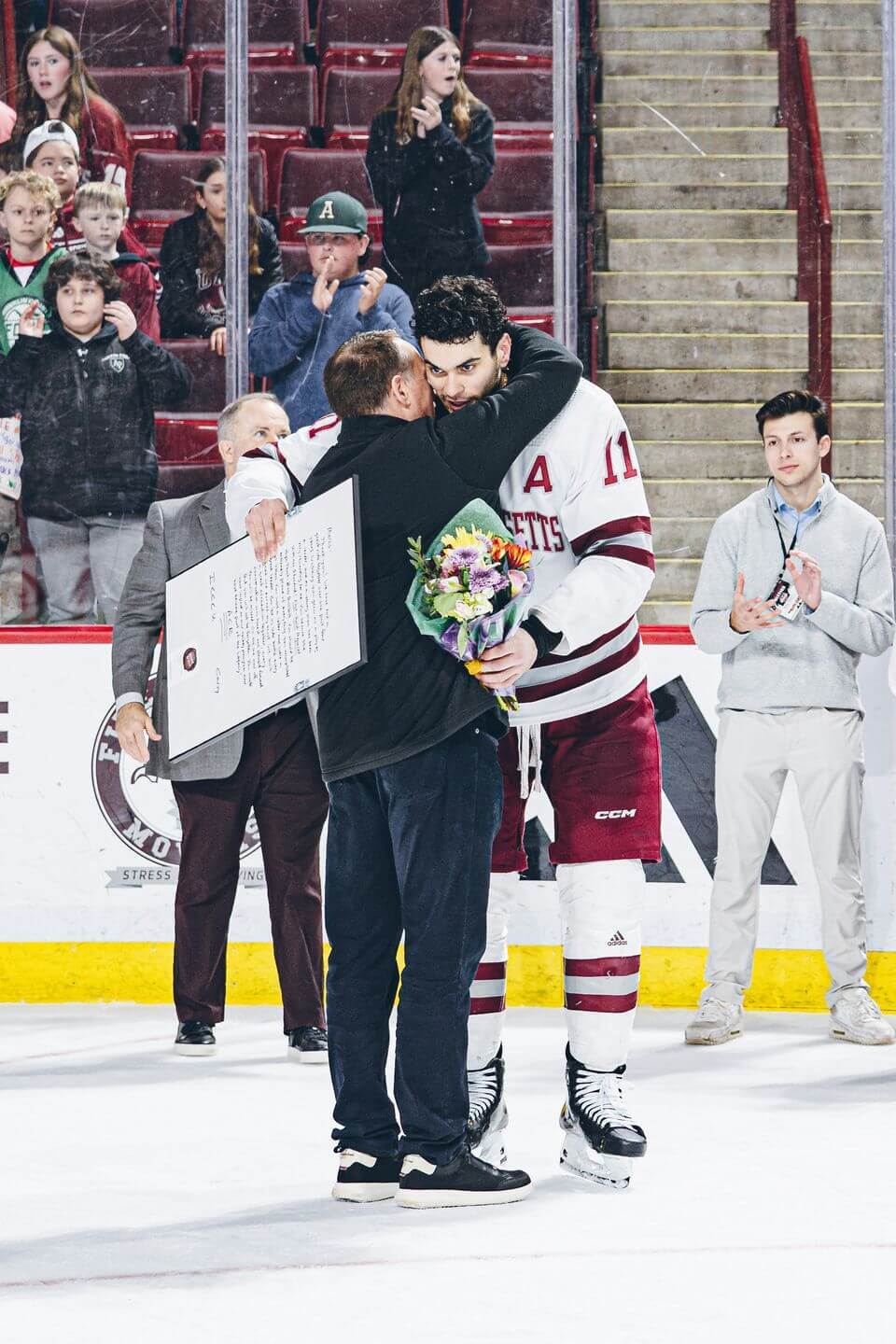 I also learned that communication is everything. Instead of sitting in silence and letting frustration grow, I learned to ask questions, to listen, and to take feedback without ego. It takes maturity to have those conversations, especially when you are not happy with your role, but that is part of growing up as a player. Coaches respect honesty and accountability, and once I started communicating in a calm and professional way, I noticed a shift. Even when I did not get the answer I wanted, I gained clarity and built stronger relationships. Looking back, the toughest coaching moments were the ones that helped me grow the most.
They forced me to be honest with myself, to stay humble, and to adapt to different situations. Every team has a different culture, and every coach has a different approach, but the players who last are the ones who can adjust while staying true to their identity. It is never easy, but if you approach those challenges with an open mind, they become lessons that shape your character both on and off the ice.
LEAD WITH YOUR HEART
Being a leader always starts within yourself. You cannot tell someone to do something or hold them to a standard if you are not living up to it yourself. Leadership is about setting the example through your own actions and holding yourself accountable first. Every day, in practice, in games, and in the way you prepare off the ice, you show your teammates what is expected not by words but by your consistency and effort.
I have played with teammates who only cared about themselves and would sulk when things got tough. Seeing that made me realize early on that it was not how I wanted to be. Being on a team means showing up, staying engaged, and keeping the focus on the group even when things are not going your way. If you let frustration take over or only think about your own challenges, it affects everyone around you. Those situations taught me that leadership is more about consistency than speeches or motivation. You just keep doing your part, staying focused, and handling your role, and that sets the tone.
Leadership is not about being the loudest voice in the room. There were moments when I had to step up, whether it was pulling a teammate aside, setting the tone in practice, or trying to bring the group together after a tough loss. You quickly realize that being a leader is not about being liked all the time. It is about doing what is best for the team, even when it is uncomfortable. Sometimes that means holding people accountable, and sometimes it means just listening and helping a teammate through something personal. The best leaders I have been around had empathy, but they also had standards. That is something I have tried to carry with me, to lead in a way that earns respect, not attention.
 I have always tried to lead with my heart. You can ask any of my teammates, and they will tell you that I cared tremendously about them, about their development, and about the group as a whole. Leadership is not about making everyone happy. As Nick Saban says, if you want to make everyone happy, do not be a leader; sell ice cream. Leadership is about making the tough decisions, holding people accountable, and staying consistent even when it is uncomfortable. It is about showing up, putting the team first, and leading by example. That mindset has guided me through every team I have been on and continues to shape how I try to lead today.
EARNING OVER DESERVING
At UMass I quickly learned that I had to earn everything I got. Nothing was handed to me just because of my past success or talent. This taught me a powerful lesson about earning versus deserving. I do not believe in talking about deserving things because that mindset feels like entitlement. In hockey and in life you must go out every single day and earn your spot. There are no shortcuts or free passes. The rent is due every day, and if you want to compete and succeed, you have to show up ready to work harder than the day before. That mindset keeps me focused and hungry no matter what stage I am at.
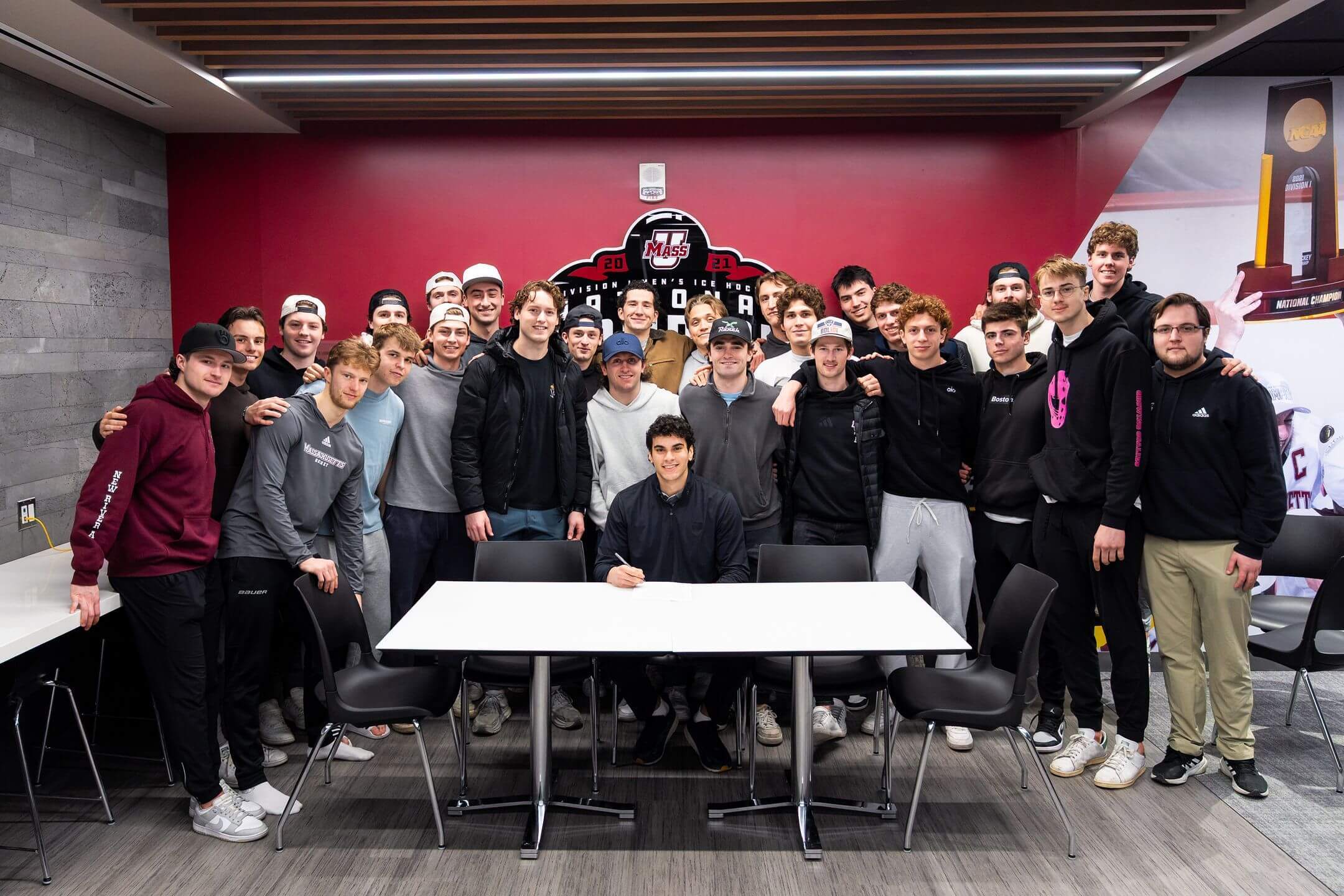 That lesson became even more important when I made the transition to pro hockey. The game gets faster, the players get stronger, and the margin for error becomes smaller. Everyone at this level has skill and talent, so what separates players is consistency, effort, and preparation. Every day you must prove that you belong, whether it is in practice, in the gym, or in a game. No one cares what you did in the past and only what you do today. That reality can be humbling, but it also fuels my drive. I learned how to approach each day with purpose, to focus on small improvements, and to keep my emotions steady through the ups and downs of a long season.
The biggest thing I have taken from this mindset is that nothing worthwhile comes easy. There are no guarantees and no days off. You have to be willing to do the work when no one is watching and stay patient when results take time. I have come to appreciate that process and even enjoy it. That attitude has allowed me to adjust to the challenges of professional hockey, stay confident in my preparation, and trust that putting in the work every single day will always pay off in the long run.