
How Much Are NHL Hockey Sticks? Pricing Breakdown
01 16 2026
How much are NHL hockey sticks? While they can range widely, most NHL-grade composite sticks fall somewhere between about $120 and $400 in today’s market, depending on brand, materials, and technology. Pro stock sticks used by NHL players share many traits with the top retail sticks, but they’re built for specific athletes and typically come from smaller, specialized production runs.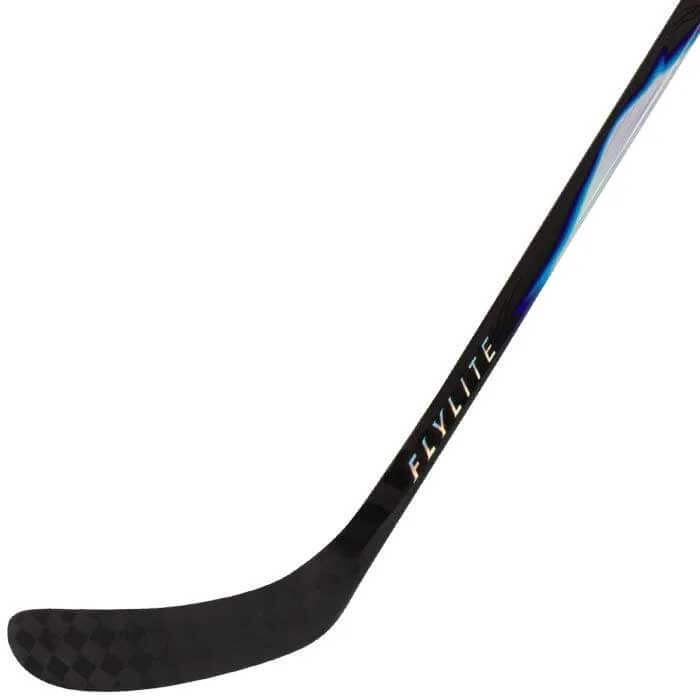
What Drives the Price of NHL-Grade Hockey Sticks
The main reason why NHL hockey stick prices climb so high is the cost of advanced materials and how they’re assembled. Modern composite hockey sticks use multiple layers of high-grade carbon fiber that are laid up in precise patterns. Higher grades, such as T800 and T1000, are lighter and stiffer than basic fibers, which means faster shots (and a greater cost).
On top of that, manufacturers invest heavily in research and development to fine-tune kick points, blade construction, and balance. Small production runs for pro models and testing with NHL players both rack up costs compared to mass-market sticks.
Primary cost drivers:
- Carbon fiber grade and layup: Ultra-light, high-modulus carbon fiber raises the price because it’s more expensive and trickier to work with.
- Kick point and shaft tech: Engineered mid or low kick point zones, rounded corners, and variable wall thickness add performance and manufacturing steps.
- Blade and core design: Foam cores, carbon bridges, and dampening layers improve puck feel and shot control, which again adds materials and complexity.
- Labor and limited runs: Small batches for specific NHL players or teams require more hands-on work and do not spread costs over huge volumes.
Pro Stock vs. Retail: How Prices and Specs Compare
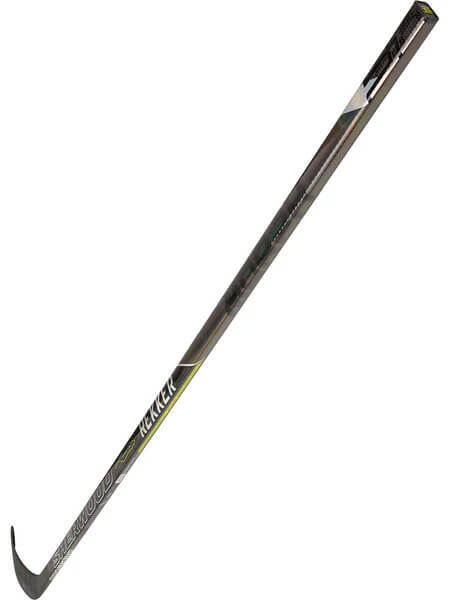 Pro stock hockey sticks are specially made for players in the NHL and other top-tier leagues. Though they often share the same graphics as retail sticks, you’re likely to find different carbon fiber layups, flex profiles, and balance points inside the shaft and blade. As these sticks are crafted for a specific player, position, and style of play, they can be stiffer, more durable, or slightly heavier than retail models.
Retail hockey sticks try to capture that high-end feel in a design that works for a broad range of players. Big brands like Bauer, CCM, Warrior, and TRUE offer multiple price tiers, from entry composite models to flagship sticks at the very top. Senior top-end sticks from these brands often land between about $300 and $380 at major retailers.
How specs and pricing compare in practice:
- Construction and feel: Pro stock sticks can use slightly different carbon schedules or a thicker blade for extra durability in pro games, while flagship retail models aim for the lightest possible build to fit the average buyer.
- Durability: Because pros lean hard into their shots, their sticks are intended for intense use but may still break more often due to the professional level of play. Rec and beer-league players usually get more life from the same or similar model.
- Price expectations: New flagship retail sticks often sit around the $300–$400 mark, while pro stock models can be sold to the public at a bargain once teams move on to a new batch.
If you’d like to compare options, reading a detailed hockey stick buying guide or hockey stick reviews can help you unpack the specs.
Typical Price Ranges by Major Brands
Different hockey stick brands group their sticks into different tiers. Although the prices vary by retailer, the common ranges for senior composite models look something like this:
- Bauer hockey sticks: Entry-level composite sticks often start around $120–$150, mid-tier runs from roughly $180–$260, and elite models like Vapor and Nexus flagships can reach $320–$380.
- CCM hockey sticks: Lines such as Jetspeed and Ribcor follow similar tiers, with top sticks often in the $320–$370 range for current-year models.
- Warrior hockey sticks: Popular lines like Alpha and Novium typically place their highest-end sticks near the $320–$360 mark, with more affordable models starting closer to $140.
- TRUE hockey sticks: TRUE focuses on lightweight hockey sticks built with premium carbon fiber; their senior flagships often sit in the neighborhood of $280–$350, with value options below that.
Prices can drop sharply when a new model year arrives or when retailers run sales. Prior-year pro-level sticks become some of the most affordable hockey sticks on the market, especially if you’re comfortable buying online after reviewing a hockey stick size chart and using a hockey stick length guide.
How Custom Specs Influence What You Pay
Customization is another big component behind NHL hockey stick prices. Advanced players often seek specific hockey stick materials, flex, and curves that match their hand position, shot style, and role on the ice. Small-batch builds end up costing more than mass-produced models since factories change patterns and tooling for a shorter run.
Common customizations that change price:
- Flex and kick profile: Custom hockey stick flex ratings or hybrid profiles change how the shaft loads, which in turn shapes shot power and release. Pros test out several setups to find the one that fits their style and shots.
- Curve, lie, and blade feel: Custom blade patterns and lies help a player control the puck in tight spaces. What is the lie of a hockey stick? Our guide explains how it can change your game.
- Length, grip, and finish: Pro-length shafts, special textures, and tailored hockey stick grip options add comfort and control but can raise costs, especially in one-off or limited runs.
If you need help dialing in, our hockey stick flex guide walks you through how body weight, position, and level of play all factor into your final choice.
Weight, Durability, and Replacement Frequency
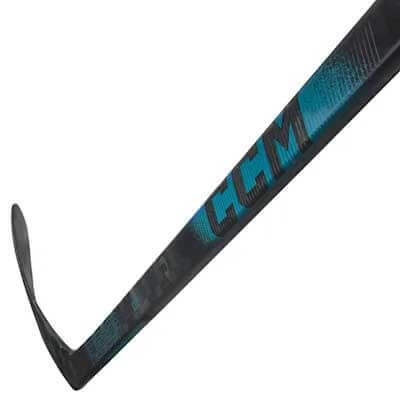 The trend toward lightweight hockey sticks comes from carbon fiber’s high strength-to-weight ratio. Top-end carbon fiber hockey sticks can feel nearly effortless to swing while still delivering a stiff, responsive shaft. And compared to wood, modern composite sticks usually offer more power, custom kick points, and better energy transfer on shots.
There’s a tradeoff, though: extreme weight reduction can also reduce lifespan. NHL players, who play heavy minutes and lean into every shot, can go through 60–150 sticks per season, depending on their role and schedule. But serious amateurs using the same stick a few times per week will often get many months out of a modern composite.
What this means for the total cost of ownership:
- Lighter sticks usually cost more and can break sooner if you take the ice daily, so you need to budget for replacement along with upfront price.
- Basic hockey stick maintenance helps: wipe the shaft, dry the blade after ice time, and retape worn areas to aid in preventing hockey stick damage.
- Storage matters: keeping sticks out of hot cars, damp garages, or sharp temperature swings is one of the simplest hockey stick storage solutions for safeguarding your investment.
Are you wondering, “What are NHL hockey sticks made of?” Most high-end models use layered carbon fiber, fiberglass, and sometimes Kevlar around a lightweight foam or hollow core.
How to Spend Smarter: Clearance and Used Pro Stock
You don’t necessarily need the newest release to play good hockey. Smart shoppers count on model-year timing, careful hockey stick comparisons, and a close look at their own level of play to find the sticks that fit both budget and performance.
Popular clearance sticks like prior-year flagship options still provide high-end hockey stick technology; buying these after a new line drops lets you get almost the same performance at a much lower price point. Browse between player hockey sticks, used hockey sticks, and clearance sticks to see how prices shift by model year and condition.
Top tips for stretching your dollar:
- Shop used pro stock carefully: Check handedness, flex, and pattern against your hockey stick curve chart. Look closely for cracks near the blade or lower shaft and consider basic hockey stick repair kits only for minor cosmetic issues.
- Match the stick level to your play level: Recreational and beginner hockey players can often use mid-tier sticks or bargain hockey sticks for beginners, while elite juniors or pros might want fresh pro stock hockey sticks for maximum performance.
- Think about the whole setup: Budget for hockey stick accessories like butt-end plugs and the best tape for hockey sticks, since proper taping and grip help with control and feel.
Parents and youth coaches on the hunt for the best hockey sticks for kids often lean on hockey stick reviews and clear charts for length and flex. For growing kids, it can be smarter to buy a solid mid-tier stick that fits now instead of an ultra-expensive model they might outgrow in one season.
Bringing Price, Performance, and Fit Together
So, how much are NHL hockey sticks, really? Most NHL-grade composite sticks sit in a broad range from about $120 up to $400, with price shaped primarily by carbon fiber quality, brands and lines, and how customized the specs are. If you match your flex, curve, and length to your position and playing style, you’ll end up getting far more value than you would from simply choosing the most expensive hockey stick on the wall.
Ready to compare your options? Shop Our Full Hockey Stick Collection