
How to Size Hockey Skates
11 18 2025
Finding the right skate fit can bring your game to new levels. Whether you’re a parent buying a first pair for your child or an advanced player fine-tuning your stride, knowing how to size hockey skates provides comfort, balance, and performance. Poorly sized skates can lead to blisters, reduced speed, and long-term injuries, while a properly fitted pair helps maximize power transfer and edge control.
Below, we’ll walk through everything from measurement techniques and sizing charts to advanced fitting methods, brand differences, and essential accessories.
Why Proper Skate Sizing Matters
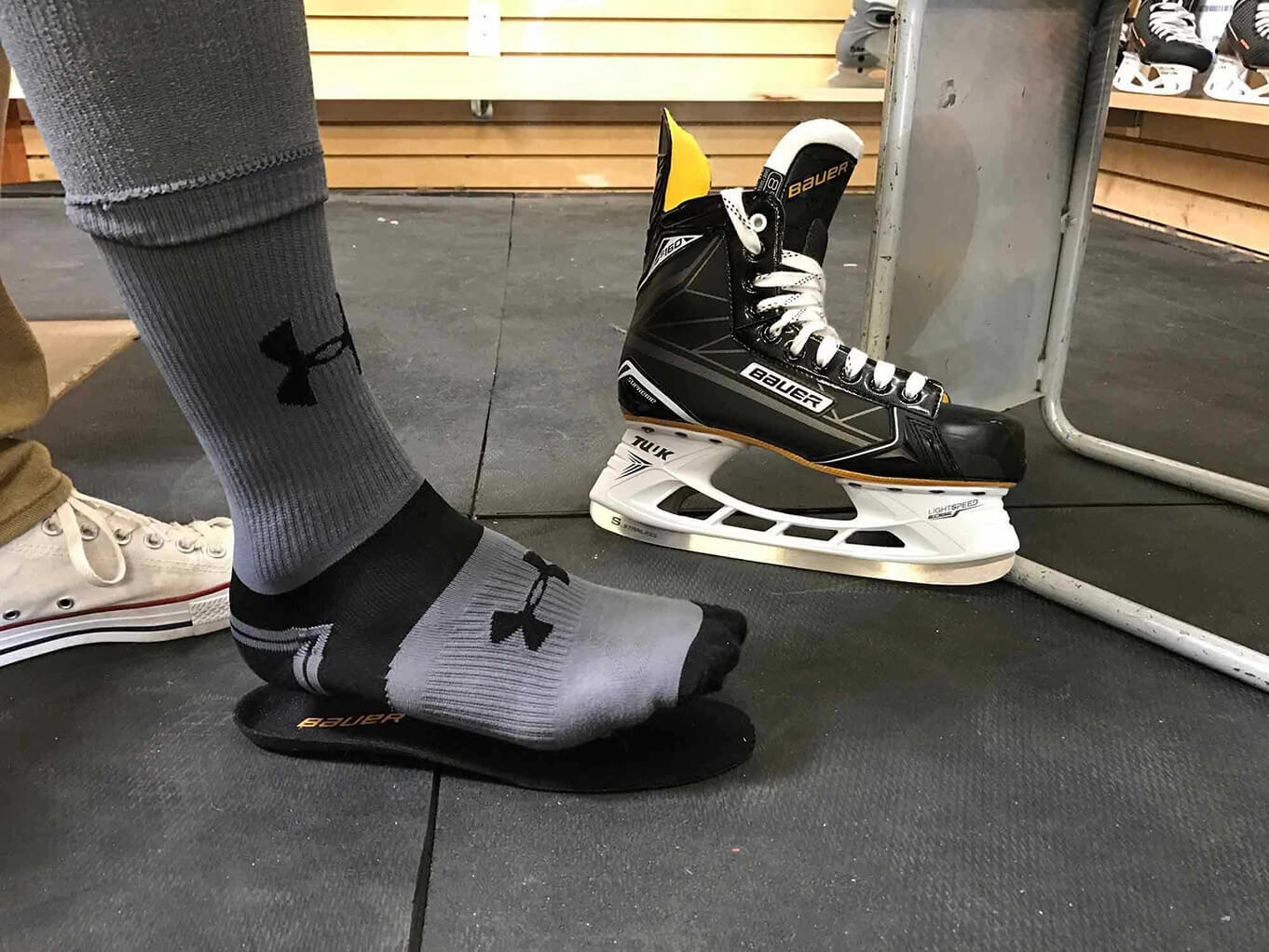 More than a matter of comfort, choosing the right hockey skates directly affects your performance and safety on the ice. A properly sized skate supports strong strides, improves acceleration, and prevents painful hotspots or blisters. If your skates are too loose, your foot can slide, wasting energy and reducing control. Too tight, and circulation is restricted, leading to numbness or fatigue.
Correct hockey skate sizing enhances your stability and agility by keeping your heel locked in place, allowing more efficient energy transfer from leg to blade. Players who wear the correct size experience less fatigue and maintain sharper edges longer, giving them a consistent feel on the ice every time they play.
How to Measure Feet for Hockey Skates
Before shopping, you’ll need accurate foot measurements. This helps you match your foot shape and length to the right model and brand. You can measure at home using a ruler or tape measure — or for the best accuracy, at a professional hockey store.
Follow these steps for a quick at-home guide:
- Prepare materials: You’ll need a flat piece of paper, a pen, and a ruler or measuring tape.
- Trace your foot: Place the paper on a hard surface, step onto it wearing hockey socks, and trace the outline of your foot.
- Measure the length: Use the ruler to measure from your heel to the tip of your longest toe. Record this in centimeters or inches.
- Measure the width: Measure the widest part of your forefoot to help determine your hockey skate width.
- Compare results: Refer to a hockey skate sizing chart from Bauer, CCM, or True to match your length and width to the correct size.
Taking accurate measurements reduces common fitting mistakes and maintains a secure, supportive fit.
Understanding Hockey Skate Sizing Charts
It’s important to note that hockey skate sizes don’t match regular shoe sizes. Most players wear skates that are one to one-and-a-half sizes smaller than their shoe size, depending on brand and foot shape. For example, a men’s U.S. shoe size 9 typically corresponds to a size 7.5 or 8 in hockey skates.
Each manufacturer interprets sizing differently:
- Bauer skate sizing: Bauer skates generally have a more contoured fit and come in three main lines — Vapor (narrow), Supreme (medium), and Nexus (wide).
- CCM skate sizing: CCM models, such as the JetSpeed or Tacks, cater to varying foot shapes but typically run slightly roomier than Bauer.
Always double-check the hockey skate size chart before buying, as even half-size differences can affect comfort and performance.
Youth, Junior, and Senior Hockey Skate Sizing
Breaking down the distinctions between size categories helps players and parents make smart purchases that last:
- Youth hockey skate sizes: Designed for children typically under age nine, youth sizes range from 6Y to 13.5Y. Choose a snug but not restrictive fit and allow about a half-inch of growth room.
- Junior hockey skate sizing: For ages 9–13, junior sizes span 1–5.5. At this stage, it’s important to balance growth room with proper ankle support to prevent slippage.
- Senior hockey skate fit: For teens and adults (sizes 6 and up), focus on exact measurements and width. Proper support reduces fatigue and boosts stride power.
On the ice, players who size correctly in each category enjoy better edge control, balance, and comfort.
How Skate Width Affects Fit
Foot width plays a major role in finding your best skate. Skates typically come in:
- C / D (narrow)
- R / E (regular)
- EE (wide)
Choosing the correct width prevents pressure points and keeps your heel locked in. Players with a narrow foot may prefer Bauer Vapor skates, while those with a wider foot might feel more comfortable in CCM Tacks or Bauer Nexus models. Always account for foot shape and not just length when fitting skates — a properly balanced fit across width and volume supports stability through quick turns.
Tips for Finding the Best Hockey Skate Fit
When you’re trying on your skates, be sure to follow these best practices:
- Wear thin, moisture-wicking hockey socks to simulate on-ice conditions.
- Your toes should lightly touch the toe cap when standing straight, then pull slightly away when you bend your knees into skating position.
- Lace skates snugly from toe to ankle without overtightening (see our guide on how to lace your hockey skates).
- Walk around and perform a few knee bends to test comfort and ankle stability.
- Avoid excess “lift” or heel movement inside the boot, as this indicates the skate is too large.
The best hockey skate fit should feel snug but not painful; firm enough for responsiveness, yet flexible enough to allow ankle mobility.
Brand-Specific Fit: Bauer vs. CCM Skates
Bauer skates tend to run slightly shorter, offering tighter heel locks and narrower toe boxes. The three Bauer families — Vapor, Supreme, and Nexus — are built for distinct foot shapes, providing a more customized fit for every player type. Bauer also features the Bauer Supreme line for power skaters looking for maximum energy transfer.
CCM skates often provide a bit more room in the toe and instep, making them ideal for players who want comfort without sacrificing performance. The JetSpeed series focuses on agility and speed, while Tacks models offer a traditional anatomical fit. For players seeking personalized precision, CCM’s custom fitting and hockey skate heat molding options are excellent.
Both brands now offer custom hockey skate fitting services, allowing players to scan their feet for a 3D-molded design tailored to their exact measurements.
Common Mistakes in Skate Sizing
Avoid these common errors when shopping for new skates:
- Using shoe size instead of skate size: Always measure and refer to a hockey skate sizing guide.
- Choosing skates too big for growth: Extra space can cause instability and blisters.
- Ignoring width and foot shape: Poor width selection often leads to pinching or slippage.
- Skipping the break-in process: All skates require some time to form properly to your feet (explore our guide on breaking in hockey skates).
Even small sizing mistakes can result in discomfort or poor on-ice performance, especially during long sessions or tournaments.
Final Sizing Checklist
Before committing to a new pair, confirm the following:
- You’ve measured both feet for length and width.
- The fit matches your hockey skate size chart.
- Your toes brush the toe cap slightly when standing straight.
- Your heel remains locked with no lift.
- You’ve accounted for brand differences (Bauer vs. CCM).
- You plan to use quality hockey skate insoles for support and comfort.
- You plan to shop hockey skate laces and learn how to change your skate blades.
A few minutes double-checking your measurements can save hours of discomfort — and hundreds of wasted dollars.
The Bottom Line on Sizing Hockey Skates
Properly sizing hockey skates is one of the most important steps a player or parent can take. The right fit enhances speed, agility, and balance while protecting against blisters and injuries. From first-time youth players to those upgrading to a performance-enhancing hockey skate, all players should prioritize measurement accuracy, width, and brand fit.
Pro Stock Hockey offers NHL goalie skates, player skates, and hockey gear & accessories for every level of play — all at professional standards. Explore our resources on hockey stick flex, hockey sticks, and maintenance tips to complete your setup.