



Choosing Between Hockey Pants and Girdles
09 11 2018
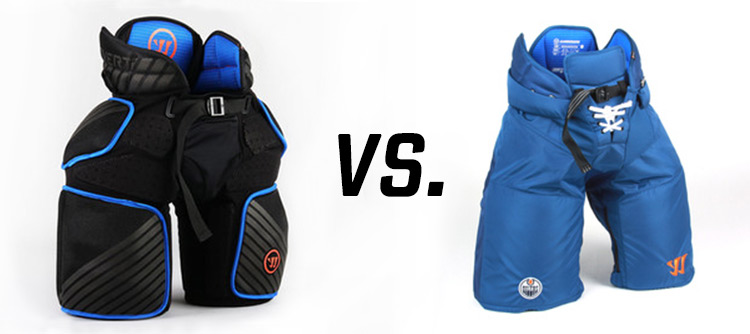
When choosing hockey pants, you don’t want to make a mistake.
We’re not even talking a Cooperalls-level mistake. Long pants have, thankfully, been consigned to the clearance rack of hockey history.
Rather, your choice is between traditional ice hockey pants and ice hockey girdles. They do the same job, but differently enough so that choosing between the two is not merely a matter of aesthetics (even though appearance is part of the deliberation, as well). Do you want to look like Gordie Howe or feel like a superhero?
At the most basic level, traditional pants appear a little looser, and with the padding built in, the overall effect tends to be a more voluminous appearance. Girdles are akin to armored compression shorts, covered with a closer-fitting pair of shorts called a “shell.”
Fit Bits
Before we get into the cargo shorts vs. slim fits argument, here’s what you’ll want to make sure of when trying on whichever option you choose:
- They fit properly with your shoulder pads. There shouldn’t be any gaps in protection — sticks and pucks have a way of finding those — but neither should your pants interfere with the back and abdominal protection on your shoulder pads.
- The belt doesn’t sit on your hips, but rather at your waist, to ensure the intended kidney and lower rib protection is maintained.
- The length works with your shin guards — and what works is different from pants to girdles. Pants, when standing, should cover about half of your knee guard. The girdle should stop short of the knee guard, leaving it up to the shell to cover the rest.
Hockey Pants vs. Girdle Protection
Are hockey girdles more protective than traditional pants? Neither option automatically provides better protection. Both are designed to protect vulnerable areas, including the hips, thighs, tailbone, kidneys, and lower back. The difference comes down to the quality of the padding, its placement, and how securely it stays in position.
When comparing hockey pants vs. girdle protection, pay particular attention to the thigh pads and hip guards. These areas take considerable punishment from falls, blocked shots, and contact with other players. High-quality protective equipment uses layered foams and, in some designs, rigid inserts to help absorb and distribute impact forces.
Players in checking leagues should prioritize substantial padding around the hips and tailbone, along with dependable kidney and spine coverage. However, thicker padding doesn't necessarily mean better protection. The materials and overall construction matter just as much.
Before buying, check that the protective panels cover their intended areas without leaving exposed spots when you bend or crouch. Even expensive equipment loses much of its value if the padding shifts away from where it's needed.

Girdling Your Loins
Hockey girdles, basically, are the inside of hockey pants, disconnected from the outside and reconnected to something much more form fitting. They’re what they sound like — tight-fitting, protective garments.
A benefit of girdles is that one girdle can be worn under whatever shell you like. So, if you play for two or more teams, you can swap out shells and use the more expensive girdle with all of them.
Also, some girdles come with a built-in protective cup. You’ll need to wear a cup and supporter under traditional hockey pants.
Shorts Report
The best hockey pants are loose, except at the belt. The pads are built into and move with the shorts. They’re a much more traditional look than girdles with hockey shells. Some players prefer to wear their hockey pants with suspenders, to make sure the belt stays as high as it needs to be.
Mobility, Weight, and On-Ice Performance
When weighing hockey girdle vs pants options, consider how each feels during actual skating movements. A girdle's close-fitting design may help some players move through crossovers, deep knee bends, and full strides without excess material getting in the way.
Traditional pants offer more room around the legs, which other skaters find more comfortable. Neither design guarantees better skating performance. Your range of motion depends on the specific model, its construction, and how well it fits your body.
Weight is another consideration. Some girdles weigh less than traditional pants, although the difference may shrink once you add a hockey girdle shell. Ventilation also varies between models, particularly around the thighs and waist.
Try performing a skating stance, deep squat, and side-to-side movements while wearing your equipment. If the padding catches, bunches, or restricts your stride, another size or design may be more suitable.
Which Is Better for Beginners and Recreational Players?
For beginners, traditional hockey pants are often a practical starting point. Their all-in-one construction makes getting dressed simpler, particularly for younger players who are still learning how to put on their equipment.
Recreational players may also appreciate this convenience, although experienced skaters sometimes prefer the closer feel and adjustable features available with certain girdles.
For parents shopping for youth players, hockey girdle sizing deserves special attention. Check the manufacturer's size chart using waist and hip measurements rather than relying on age alone. Make sure the thigh protection reaches the intended area without interfering with the knees.
Players considering pro-stock equipment should examine individual product specifications, since professional-grade models can vary in fit and protective construction.
Pro Stock Hockey offers equipment originally manufactured for professional and college hockey programs, giving amateur players access to options designed for high-level competition.
Regardless of experience, choose equipment that fits properly today rather than buying an oversized model with excessive room for growth.
Caring for Hockey Girdles and Pants
Proper maintenance helps protective equipment last longer and reduces unpleasant odors. After each game or practice, remove your pants or girdle from your bag and allow them to air-dry completely.
For girdles, check whether the outer shell can be machine-washed according to the manufacturer's care instructions. Protective padding may require different cleaning methods, so avoid exposing foam components to excessive heat or harsh detergents.
Inspect straps, stitching, fasteners, and padding regularly. Worn Velcro, loose seams, or damaged protective inserts can affect how securely your equipment fits during play.
A damaged hockey girdle shell may be replaceable without purchasing an entirely new girdle. However, cracked protective inserts, compressed padding, or significant structural damage can mean it's time to replace the protective equipment itself.
Final Analysis
One argument some make against girdles is that their relative tightness feels as if it restricts a player’s stride, and the overall fit is finicky and requires constant adjustment. Conversely, others say that same close fit feels lighter and makes them feel stronger and more athletic, and the pads moving in unison with the legs feels more natural.
Ultimately, it’s a matter of personal preference. Either way, quality hockey pants or a girdle, properly fitted, will protect and perform well.
Have any ideas for the blog? Topics you would like to see covered? Contact us and let us know!