



The Evolution of Hockey Sticks and Their Impact on the Game
07 03 2025
From early handcrafted tools to modern engineering marvels, the evolution of hockey sticks tells the story of how innovation and performance have shaped the sport itself. Knowing how these essential pieces of equipment have changed over time reveals more than just material upgrades; even deeper, it shows how technology, design, and player needs have redefined the way hockey is played at every level.
This comprehensive guide explores the history, technological milestones, and design breakthroughs that transformed a simple wooden stick into a precision instrument capable of changing the outcome of a game.
How Hockey Sticks Have Changed Over Time
The evolution of hockey sticks resembles hockey’s own growth — from frozen ponds to NHL arenas. The earliest sticks, carved by hand from wood, were rugged and heavy, built for endurance rather than finesse. As the game developed, the tools did in tandem, transitioning from simple craftsmanship to performance-driven design backed by science and technology.
Today, materials like carbon fiber and Kevlar have replaced hardwoods, and engineering precision has replaced trial and error. What began as a humble tool of the game is now one of its most advanced components.
The History of Hockey Sticks
Early Origins: The Mi’kmaq Era (Early 1800s–1860s)
The story begins in the early 1800s with the Mi’kmaq people of Nova Scotia, who are widely credited as the original creators of the wooden hockey stick. Their early models were made from hornbeam, a strong, flexible hardwood later replaced by ash for its greater availability. By the 1860s, the Starr Manufacturing Company in Dartmouth, Nova Scotia began mass-producing Mi’kmaq designs, helping to standardize the sport’s equipment and fueling the rise of organized ice hockey.
Industrial Growth: The Wooden Stick Era (Late 1800s–Mid 1900s)
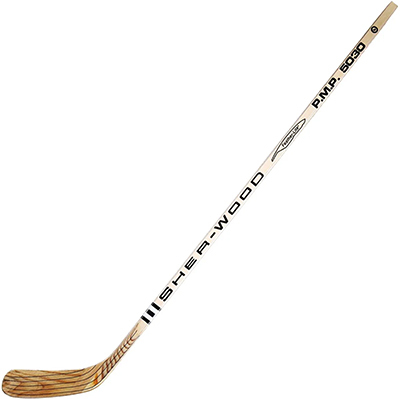
Wooden sticks dominated the 19th and much of the 20th century. Though heavy and prone to absorbing moisture — which caused warping — they offered a natural puck feel that players loved. Over time, stick shapes began to vary, as athletes experimented with blade curvature and shaft length to personalize performance. Manufacturers began refining designs for balance and durability, giving rise to the first major differences between forward, defensive, and goaltender sticks.
Modernization: The Transition Years (Mid 1900s–Late 1900s)
As hockey gained global popularity, mass production and material innovation began to accelerate. The introduction of fiberglass coatings in the 1960s marked the first step away from pure wood construction, setting the stage for the aluminum and composite revolutions to come. Still, wooden sticks remained the standard for most players well into the 1980s, symbolizing both tradition and accessibility.
This period cemented the hockey stick as a symbol of both tradition and skill, a balance of craftsmanship and athleticism that continues to influence designs today. Even now, some players and collectors value wooden sticks for their tactile feedback and nostalgic connection to hockey’s roots.
For a deeper comparison of traditional and modern hockey stick materials, see our breakdown of wood vs. composite sticks.
Fiberglass and Aluminum Hockey Sticks
By the 1960s, hockey saw its first wave of technological advancement: fiberglass-wrapped wooden sticks. These offered improved durability and consistency, marking a turning point toward material experimentation. Players could now rely on sticks that maintained performance longer, regardless of weather or ice conditions.
Fiberglass Sticks (1960s–1970s)
Fiberglass was used to reinforce wood, making sticks more resistant to cracking while maintaining a familiar feel. For the first time, manufacturers realized that layering new materials over wood could significantly boost lifespan and flex reliability.
Pros:
- Greater durability than traditional wood
- Consistent flex and performance
- Retained traditional puck feel
Cons:
- Still relatively heavy
- Prone to chipping or delamination over time
Aluminum Sticks (1980s–1990s)
The next leap came with aluminum shafts, paired with replaceable wooden blades. This modular design allowed players to reuse shafts while swapping stick blades — a cost-effective and customizable innovation. Elite players like Wayne Gretzky and Brett Hull famously used aluminum sticks during this period.
Pros:
- Extremely durable
- Interchangeable blades for customization
- Affordable over long-term use
Cons:
- Stiff and less responsive feel
- Poor puck control compared to wood
Although aluminum never became the dominant choice, it paved the way for a new philosophy: performance through engineering. The focus shifted from craftsmanship to material science, subsequently setting the stage for the next revolution.
The Composite Stick Revolution
The early 2000s marked a game-changing shift: the rise of the composite hockey stick. Constructed from advanced materials like carbon fiber, Kevlar, and fiberglass, these sticks combined lightweight construction with incredible power and precision.
Unlike their predecessors, one-piece composite sticks eliminated the junction between shaft and blade, improving energy transfer and shot accuracy. This design made shots faster, passes smoother, and gameplay quicker.
Key Advantages of Composite Sticks:
- Up to 40% lighter than wood or aluminum
- More consistent flex and kick points
- Higher shot velocity through energy return
- Customizable curves, flex ratings, and grips
Nearly every NHL player now uses a composite stick, but early adopters faced challenges. Initial models were expensive and less durable, often breaking suddenly under stress. Over time, manufacturers refined production methods, increasing lifespan and accessibility.
Today, players at all levels — from youth to pro — can access elite-level performance through affordable composite models. These materials have not only elevated gameplay but have also reshaped player training and shot mechanics.
Modern Stick Design and Performance
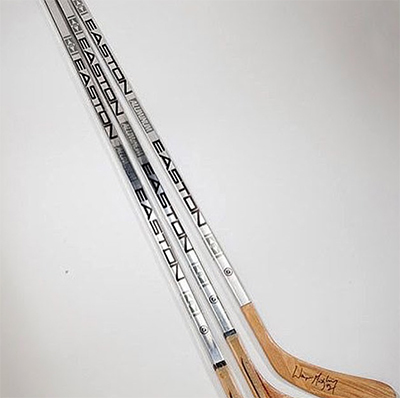
The design of hockey sticks today is guided by precision engineering. Every curve, flex, and contour influences how a player handles the puck or releases a shot. Three main design innovations dominate the modern stick landscape:
1. Flex
Hockey stick flex rating determines how much it bends during a shot. For example, a 75-flex stick bends more easily than a 100-flex, helping players achieve faster wrist shots but with less power. Modern sticks allow players to choose flexes suited to their position and strength.
2. Blade Curve
The blade curve — whether toe, mid, or heel — shapes puck control and shot trajectory. The introduction of curved blades in the 1960s by Bobby Hull and Stan Mikita revolutionized shooting accuracy, forcing leagues to regulate curve depth for safety. For more detail on curve types, see hockey stick curves.
3. Kick Point
The kick point is where the stick flexes most during a shot.
- Low kick point: Fast releases for close-range shots.
- Mid/high kick point: Powerful shots from the blue line.
Understanding kick point helps players match their stick behavior to their role, whether a sniper up front or a defenseman on the perimeter. Modern sticks have become tools of performance optimization — fine-tuned for control, precision, and player comfort. Every detail, from grip texture to balance point, plays a role in maximizing on-ice efficiency.
How Modern Sticks Impact Player Performance
Today’s hockey sticks are engineered to enhance every facet of play; the transition from wood to composites has revolutionized shot speed, control, and endurance.
Performance Benefits:
- Increased Shot Speed: Composite materials can boost shot velocity by 10–15 mph.
- Better Puck Control: Lighter designs improve stickhandling and passing.
- Reduced Fatigue: Less weight means longer endurance over full games and seasons.
Players like Connor McDavid rely on low-kick composite sticks for rapid wrist shots, while defensemen often choose stiffer models for longer reach and power.
Biomechanics also play an important part; a properly matched flex and kick point help reduce energy loss, improving accuracy and reducing muscle fatigue. These advantages accumulate over time, which is critical for elite players logging heavy minutes throughout a long season. Curious how stick selection impacts your play? Learn how tall a hockey stick should be and more.
Goalie Stick Evolution
Goalies haven’t been left ignored in the evolution of hockey sticks. Once made entirely of wood, modern goalie sticks now feature composite materials designed to absorb impact and reduce vibration.
As shots have become faster and more deceptive due to curved hockey sticks, goalie sticks have evolved for control and protection. Lighter shafts allow quicker reaction times, while reinforced paddles help deflect high-velocity pucks. The balance of weight and strength helps goalies manage rebound control — an invaluable skill in today’s high-speed game.
The Future of Hockey Sticks
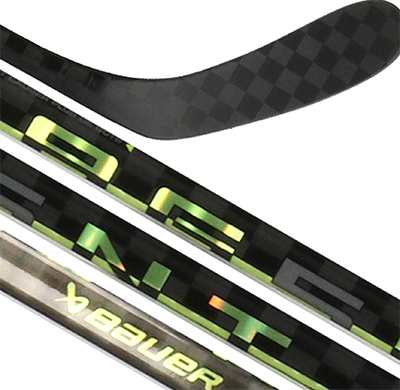
The next chapter in the evolution of hockey sticks is being written right now. Looking ahead, we can predict that it’s an era that will blend technology, sustainability, and personalization.
Emerging Innovations:
- Smart Sticks: Built-in sensors to track shot speed, angle, and flex for real-time feedback.
- AI Customization: Data-driven recommendations for flex, kick point, and blade curve.
- Sustainability: Recyclable components and carbon-reduced manufacturing, led by partnerships like Bauer and McGill University.
As these technologies advance, future hockey sticks may be entirely personalized to each player’s biomechanics, helping maximize both performance and longevity. To see what’s shaping equipment across the league, explore top hockey equipment trends.
FAQs on Hockey Stick History
What materials were used in early hockey sticks?
Early sticks were made from hornbeam and ash, chosen for durability and flexibility.
Which hockey stick brands are the best in 2025?
Leading brands include Bauer, CCM, Warrior, and TRUE, each offering composite models for different play styles.
How has the hockey stick changed over time?
It evolved from solid wood to fiberglass, then aluminum, and finally to lightweight carbon fiber composites.
What is the history of hockey sticks?
Originating with the Mi’kmaq people in the 1800s, hockey sticks have continually changed alongside improvements in manufacturing and gameplay.
When did hockey sticks stop being made of wood?
By the early 2000s, most professional players had transitioned from wood to composites due to performance advantages.
When did TRUE start making hockey sticks?
TRUE entered the hockey market in 2014, quickly gaining popularity for its innovative composite designs.
Why Hockey Stick Evolution Matters Today
Ultimately, the evolution of hockey sticks encapsulates how the sport itself continues to innovate. From handcrafted wooden designs to data-enhanced performance tools, every breakthrough has changed how players train, shoot, and compete.
Explore today’s best pro stock sticks and experience the latest in hockey stick technology.