
History of the NHL
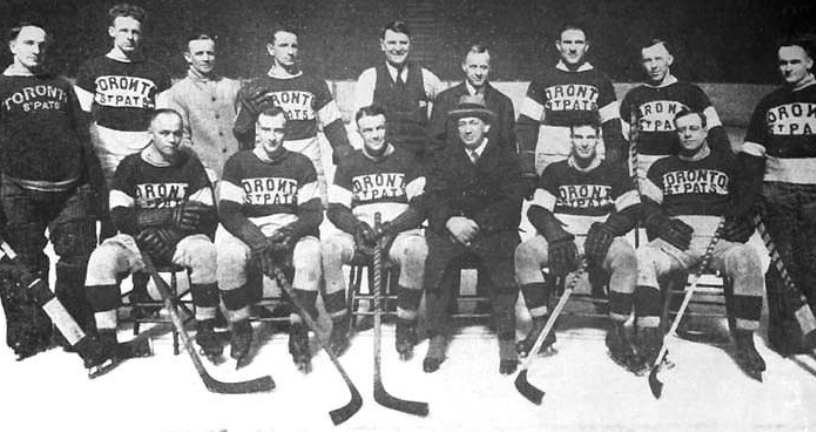
Diving deep into the history of the NHL expansion, we see how a small regional league became one of the largest professional hockey organizations in North America.
Founded in 1917, the National Hockey League began with only a few teams competing in eastern Canada. Over the decades to follow, the league gradually grew through expansion franchises, mergers, relocations, and structural changes that reshaped professional hockey.
Each stage of NHL expansion history brought new markets, new fans, and new opportunities for the sport to spread across the United States and Canada. The addition of NHL expansion teams helped hockey reach cities that had never hosted professional teams before. New franchises expanded television audiences, intensified regional rivalries, and increased the commercial reach of the sport. Expansion also opened the door for more young players to emerge, as well as new arenas and broader media coverage.
From the historic dominance of the NHL Original Six franchises to the exponential growth seen in the modern NHL era, expansion has forever changed league identity, competition, and fan culture.
Today, the NHL operates with 32 teams across North America, organized through conferences and divisions that reflect decades of NHL growth. Revisiting the history gives us a clearer understanding of how professional hockey developed into the game we know and love it as now.
How NHL Expansion Shaped Conferences and Divisions
As NHL expansion ramped up, the league’s organizational structure had to evolve in lockstep with its growing number of franchises. Early NHL seasons required little formal structure, but as more NHL expansion teams entered the picture, scheduling and competitive balance became more complex. Teams were now spread out across larger geographic areas, which increased travel demands and required a more thoughtful schedule.
These changes led to the formal creation of conferences and divisions, helping organize teams geographically and foster rivalries. Today’s NHL league structure is the product of decades of growth and realignment. Developing NHL conferences and divisions allowed the league to manage travel distances, schedule balanced seasons, and create a playoff format that accommodates more teams than ever before.
Each wave of the NHL’s expansion forced the league to rethink its structure, shaping the modern competitive landscape and how teams qualify for the Stanley Cup Playoffs.
A Timeline of NHL Expansion Teams
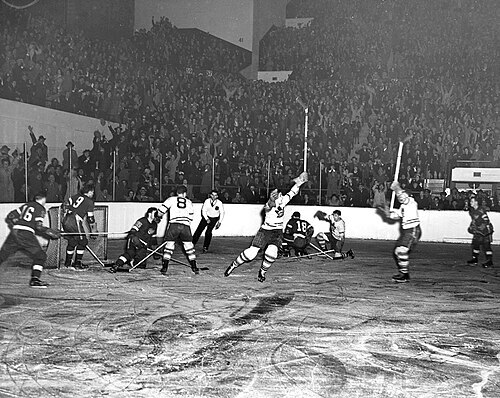
The early history of NHL expansion is often misunderstood, as many fans believe the NHL Original Six were the league’s first franchises.
In reality, those teams represent the six clubs that remained in the NHL between 1942 and 1967 after earlier franchises either folded or relocated. The Montreal Canadiens, Toronto Maple Leafs, Boston Bruins, Detroit Red Wings, Chicago Blackhawks, and New York Rangers built the foundation of professional hockey during that era; the Original Six NHL teams established rivalries, championships, and traditions that still influence the league today.
The next phase of NHL expansion began when the league started adding teams outside its traditional Canadian and northeastern markets. Over time, NHL expansion teams appeared in cities across the western United States and Canada, introducing the sport to new regions.
In the modern era, relocations have occasionally shifted franchises to stronger markets, helping maintain financial stability and fan engagement. The league’s ongoing process of expansion and relocation has played a key role in turning hockey into a truly international game.
The 1967 Expansion That Changed the NHL
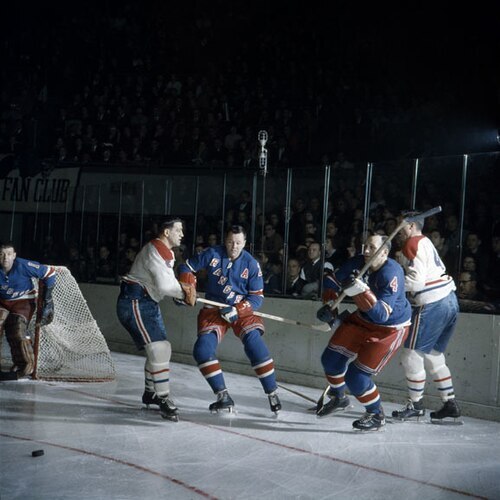
We’d be remiss not to touch on the 1967 NHL expansion, which marks the most significant moment in NHL expansion history. After operating with only six teams for twenty-five seasons, the league doubled in size by adding six franchises: the Los Angeles Kings, Minnesota North Stars, Philadelphia Flyers, Pittsburgh Penguins, St. Louis Blues, and California Seals. The 1967 expansion was driven by new television opportunities, growing competition from rival leagues, and the NHL’s desire to establish a stronger presence in the United States.
This historic move widened the league’s geographic reach almost overnight, bringing professional hockey to several untapped markets. The 1967 NHL expansion also shifted the competitive balance, as the NHL implemented an expansion draft system that allowed new teams to build rosters from players left unprotected by existing franchises. Although early expansion teams faced challenges competing against the established NHL Original Six, the move ultimately bolstered the league’s stability in the long run.
The League’s Founding Before Expansion
Before expansion could ever unfold, the National Hockey League needed to get off the ground to begin with. When the NHL was founded in 1917, it replaced the National Hockey Association and initially included only a select few teams. Its early years entailed frequent franchise changes and relocations as the league searched for stability.
Once the league fully solidified its foundation, it became possible for additional franchises to join, opening the door for long-term NHL growth.
Growth, Expansion, and Player Safety
As the NHL’s growth progressed, so did the pace and physical intensity of professional hockey; larger leagues meant longer seasons, deeper rosters, and more grueling schedules. As the sport has become even faster, greater emphasis has been placed on protecting players.
Advances in player protective equipment are part of that evolution. Modern gear, including improved hockey gloves and other protective equipment, reflects how the league has adapted to the changing demands of hockey. Hockey helmets, visors, and solid padding are also now standard across the league.
The WHA–NHL Merger and Modern Expansion
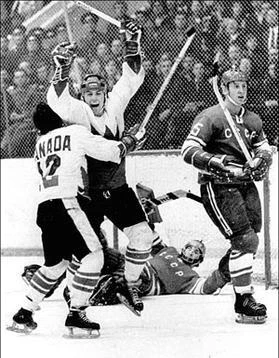
Another turning point in the history of NHL expansion happened in 1979 with the WHA–NHL merger. The World Hockey Association had operated as a rival league during the 1970s, competing with the NHL for players and markets. When the WHA folded, four of its franchises joined the NHL: the Edmonton Oilers, Hartford Whalers, Quebec Nordiques, and Winnipeg Jets.
The WHA–NHL merger accelerated NHL growth by expanding the league’s talent pool and bettering the financial prospects for players. It also reshaped the league structure, creating a more balanced competitive environment.
Stars such as Wayne Gretzky emerged during this period, helping the NHL reach a larger international audience than ever.
Broader Contributions to the League’s Growth
NHL expansion history is reflective of the broader cultural changes within professional hockey. As the league expanded geographically, it attracted players and fans from a wider range of regions and backgrounds. International players became a significant part of the NHL talent pool, helping the sport break out beyond its traditional markets.
Women in the NHL have also shaped the league’s trajectory through roles in broadcasting, coaching, analytics, and executive leadership. Their contributions have strengthened the global profile of the NHL, supporting continued growth and success for the sport.
From a Small League to a Continental Sport
Over the course of a century, expansion took professional hockey from a small regional competition to a 32-team league across North America. Expansion waves, mergers, and structural changes have reshaped the NHL league structure and helped the sport reach millions of new fans across the United States and Canada alike.
Explore Today’s Game, Built on NHL History
Today’s players carry that legacy forward with advanced equipment and modern performance gear. Browse hockey sticks, NHL game jerseys, NHL practice jerseys, and gear from leading ProStockHockey brands to see how today’s game builds on a century of NHL history.
Shop NHL Player sticks