
How to Hold a Hockey Stick Right- or Left-Handed (and What It Means for Your Game)
Posted by AJ Lee on 01 08 2019
Why Hockey Handedness Matters More Than You Think
About 90% of the world is right-handed, yet most NHL players shoot left — a surprising contrast that inevitably leads to questions about right-handed hockey stick mechanics and proper dominant hand placement. Knowing how to hold a hockey stick right-handed (and how to hold a hockey stick left-handed) is helpful for honing control, confidence, and long-term skill. In this guide, we break down the differences between right-handed vs left-handed hockey sticks, why grip matters, and how handedness affects stick control and shot accuracy for players of all levels.
Why Most Players Shoot Left (Even if They’re Right-Handed)
More than 60% of NHL athletes are left-handed hockey players, even though most people write and perform everyday tasks with their right hand. This phenomenon takes shape because young players often grab a stick with their dominant hand on top, creating a natural left-handed shot. That early instinct shapes lifelong habits, making a tangible impact on hockey stick grip technique.
Cultural and regional factors also play a powerful part. In Canada and many European countries, hockey often comes before other sports, making left-hand–on-top the default. In the U.S., exposure to baseball and basketball establishes handedness earlier, leading to more right-handed hockey players who match their stick to their writing hand instead of their natural stickhandling preference.
How to Hold a Hockey Stick Right-Handed vs. Left-Handed
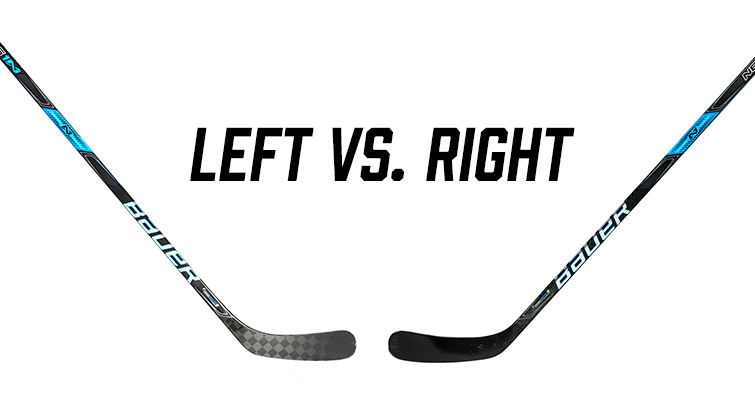
A player’s handedness is determined by which hand sits at the top of the stick, guiding control, rotation, and blade positioning. Here’s the simplest way to distinguish between the two sides:
- Right-Handed Stick: Left hand on top, right hand low → more power
- Left-Handed Stick: Right hand on top, left hand low → more control
This distinction affects hockey stick curve direction, puck stability, and overall feel during play. New players — especially when learning how to hold a hockey stick for kids — usually go with whatever feels most natural to them, creating a natural launching point for choosing hockey stick handedness.
If you're struggling to decide between the two, try both grips with a friend or coach and choose the one that gives you better stick control and shot accuracy.
What Ambidexterity Can Teach You About Stick Handling
Experimenting with both sides helps players with coordination, balance, and superior puck awareness. Developing strength and confidence on the backhand is especially important, with ambidexterity improving a player’s ability to protect the puck in tight areas.
One strategic example is off-wing positioning, which is when a right-handed shot plays the left wing or vice versa. A right-handed shooter on the left side keeps their forehand toward the center of the ice, improving lane visibility and opening more shooting opportunities.
Benefits of building ambidexterity:
- Stronger backhand control
- Better puck protection along the boards
- Improved agility during transitions
- More flexible right-handed hockey techniques
Why Your Dominant Hand Should Be on Top
Your top hand is responsible for guiding the blade and maintaining precision. So, when your dominant hand is high on the stick, you enjoy better mobility and responsiveness. Keeping your strongest hand up at the top promotes smoother puck handling, cleaner passes, and better reactions during pressure situations.
Think of it like golf: accuracy and control matter more than raw strength. With your dominant hand up top, you’re more likely to stay “in the fairway,” regardless of whether you prefer a left-handed or right-handed hockey stick.
For more equipment guidance, explore our resources:
Tools like these help players refine their setup and better grasp how grip and mechanics impact puck performance.
Right-Handed Hockey Stick FAQs
How can you tell if a hockey stick is left-handed or right-handed?
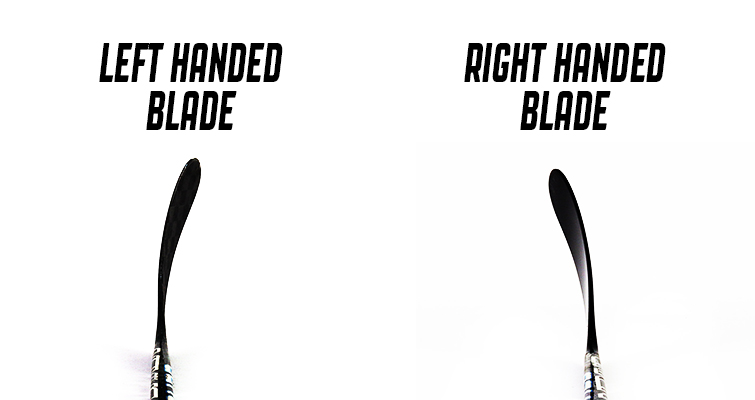
Check the blade. If it curves left, it’s a right-handed hockey stick; if it curves right, it’s a left-handed hockey stick.
Where do you put your weakest player in hockey?
Typically on the wing, where defensive responsibilities are lighter and support is stronger.
Do right-handed people shoot left in hockey?
Often, yes; many right-handed players prefer their dominant hand on top for better control.
What’s the hardest position in hockey?
Goaltender, due to its intense physical and mental demands.
Finding What Feels Natural
There’s no absolute rule for selecting between right-handed and left-handed sticks, as comfort, control, and confidence matter more than traditional handedness labels. New players should try both options and practice with different grips to figure out what feels best. Over time, playing on both sides leads to more balanced development and better on-ice awareness.
Explore top-tier gear options for either side: